Judkin's Shogi
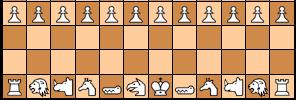
Judkin's Shogi is a modern small shogi variant, played on a board of six by six squares. The game is probably named after its inventor. The game is very similar to Shogi but is played with less pieces on a smaller board, and has a two row promotion zone.Rules
Judkin's Shogi is played on a board of 6 x 6 squares and each player has 7 pieces (including a single pawn).The pieces are flat and wedge-shaped and are not distinguished by colour. Although the pieces are of uniform colour the first player is still conventionally referred to as 'Black' and the second player as 'White'. Ownership of the pieces is indicated by the direction in which they face, with a player's pieces always pointing towards the opponent.
The players make alternate moves, with the object being to capture the opposing 'King'.
As in orthodox chess, when a 'King' is about to be captured next move and no legal move can be made to prevent the capture, the piece is said to be 'Checkmated'.
On each turn a player can either:
- move one piece according to its power of movement to a vacant square on the board, or to a square occupied by an enemy piece (in which case the enemy piece is captured and removed), or,
- 'Drop' (re-enter) a previously captured piece on almost any vacant square.

Both player have on their first row, from left to right: a
The Pieces
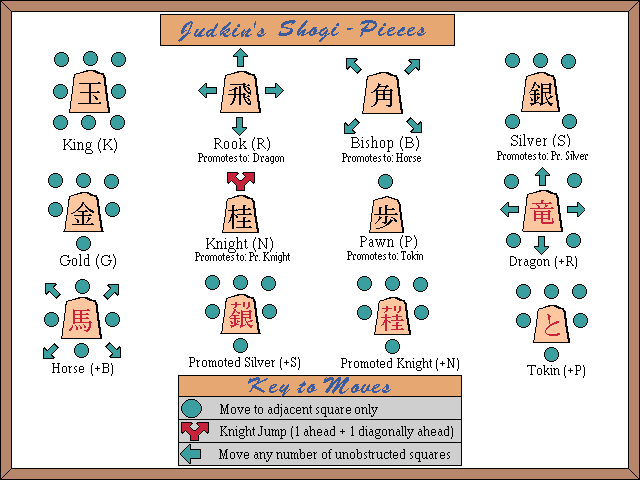
In the diagram below, you see the pieces as they appear in the game. Note that these move the same as in usual Shogi.
Promotion
Each player has a Promotion Zone consisting of the two ranks (rows of squares) furthest away from him. All pieces except the 'King' and 'Gold' have a promoted rank and can promote on entering, moving within, or leaving the Promotion Zone.On promotion:
- The 'Rook' gains the power to move 1 square in any diagonal direction. The 'Promoted Rook' is sometimes known as the 'Dragon'.
- The 'Bishop' gains the power to move 1 square in any orthogonal direction and its promoted form is often referred to as the 'Horse'.
- The promoted 'Knight' moves as a 'Gold'.
- The 'Pawn' and 'Silver' move as a 'Gold' on promotion.
As in all the games in the Shogi family, in Judkin's Shogi sets the promoted rank is shown on the reverse side of the piece, and the piece is turned over on promotion to reveal the new rank. The promoted 'Silver' and 'Pawn' use different cursive forms of the Japanese character for 'Gold', so that they can be distinguished from each other.
Captures
A captured piece is removed from the board and is held by the capturing player. The held piece (which is said to be 'in hand') may subsequently be 'dropped' back into play on the side of the player who made the capture.All promoted pieces revert to their unpromoted ranks when captured.
Drops
In place of a move a player may elect to 'drop' a piece held in hand back into play. In general, a piece held in hand may be re-entered on any vacant square, subject to the following restrictions:- A piece may not be dropped on a square from which it has no further legal move. (ie: a Pawn can not be dropped on the last rank).
- A Pawn can not be dropped in any file (column of squares) already containing an unpromoted Pawn of the same side.
- A Pawn can not be re-entered directly in front of the opposing 'King' so as to give instant 'Checkmate'.
WWW page created: April 2, 1998.
WWW page made by Hans Bodlaender, based on a text written by Steve Evans. Most of this text us from his free Shogi Variants program. Also, the images are obtained from taking screen-shots of his program, with small modifications.