Conveyor Chess
Conveyor Chess is a chess variant I came up with as an entry in the Large Variant 99 Contest. Its main feature is the central "conveyor belt" that takes pieces places.
Basic Rules
The board has a size of 12x12 squares:

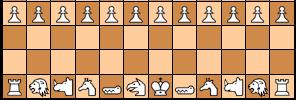
I will explain the arrows later. Here is the opening setup:
      12 MBR.GKQG.RBM
Black 11 0NCW.ZZ.WCN0
      10 DTPDPTTPDPTD
       9 ............
       8 ............
       7 ............
       6 ............
       5 ............
       4 ............
       3 DTPDPTTPDPTD
White  2 0NCW.ZZ.WCN0
       1 MBR.GQKG.RBM
         abcdefghijkl
All rules are the same as in regular chess except when they are changed in the text.
The pieces
P
is the normal pawn, used in regular chess.
D
is the Berliona pawn. For those who don't know what a Berliona pawn is, it is like a pawn, except that it moves diagonally one square without capturing and captures one square directly forward. It also has the option of a double first move.
T
is the Taxi. It is described elsewhere in the Chess Variant Pages.
The pawns in this game (the normal pawn, the Berliona pawn, and the Taxi) all promote on their 12th rank to other pieces in this game (not to another pawn) and can capture each other en passant (example: Pe3 - e5 Tf5 x e4 e.p.).
0
is the Zero. As an example of its move, the Zero on a2 can move to a2, a2, a2, or a2!
W
is the Wazir. The Wazir is a (1,0) Leaper, which means that it moves one square orthogonally.
N
is the Knight from regular chess, or a (1,2) Leaper.
C
is the Camel. The Camel is a (1,3) Leaper, which means that the Camel on c2 can move to b5, d5, e3, or e1.
G
is the Giraffe, or (1,4) Leaper.
Z
is the Zebra, or (2,3) Leaper.
B
is a Bishop that can move only six squares maximum.
R
is a Rook that can move only six squares maximum.
M
is a Knight that can move up to three times in its move (if there are no pieces in the way). In Ralph Betza's notation for pieces, this would be considered to be N3. For example, the N3 on a1 could go to d7 if there were no pieces on b3 and c5.
Q
is a Queen that can go only five squares maximum. In addition, it has the ability to move to e3 or g3 from f1. In Betza's notation, this would be considered to be K5ffN.
K
is the King. In addition to its powers in regular chess (except castling), it can move two squares in any direction in a noncapturing move (like a Dabbabah, Afil, and Knight).
All pieces can be captured (except the King, which gets mated and is the object of the game).
The Conveyor Belt
The center of the board has two areas where pieces' moving abilities are ignored. These areas form the conveyor belt. If a piece moves onto a square which has an arrow pointing from it the piece must do two things:1) the piece must end its move immediately, and 2) when the piece moves again, it will move to the square the arrow points to, regardless of what type of piece it is. Movement on the conveyor belt is vountary and takes up one turn. For example, if the Berliona pawn on a3 moves to c5, on its next moves, it will move to c6, c7, d7, e7, and then to f7.
I haven't played this before, so feel free to e-mail me comments, suggestions, and any games you have played.
Zachary Catlin, (email removed contact us for address) .net
This variant is an entry in the 1999 Large Variant contest.
Written by Zachary Catlin.
WWW page created: March 28, 1999. Last modified: May 8, 1999.