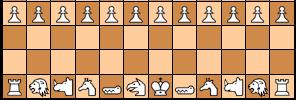
'Black holes' - sample game 2
1.b3
1...a5
2.Ba3
2...Ra6
3.(Hc1)
3...(Ha8)
4.Hb2
4...Ha7
5.Hc3
5...Hb6
6.(Hc1)White could have played 6.Hd3 attacking Ra6 that can escape only moving backwards.
6...b7-b6-b6-b4
Was this pawn sacrificed or lost?
7.d2-c3-c3xb4
7...(Ha8)
8.bxa5
8...c7-b6-b6xa5
9.H1d2
9...Hab7
10.Hdd3
10...Ra6-b6-b7-c7
Doubtful move, restricts queen's movement.
11.Hcc4
11...Hb7-b6-b6-b4+
Check by pa5, attacks Ba3 by pe7!
12.c3
12...H6c5
13.Bb2
13...Rc7-c5-c5xc4
Again move trenching material balance. I think capture of hole by rook is good decision in this position as white position is blocked afterwards and black can easily develop new holes.
14.bxc4
14...(Ha8)
15.(Hc1)
15...Hb7
16.Hcc2
16...Hbc6
Pinning Hd3 by knight through c6 and c5!
17.e3
17...Qb6
Note that this move pins pd3 among other effects, through c5 and b4.
18.Qd2
18...a5-b4-c5xe3
And here we are! Where can white queen escape?
19.Qd2-c2-d3xc3Interesting idea, taking own pawn! But its too late...
19...Bb7
Adding ever more severity to power springing from holes. Black now pins white queen not only by own queen but also by bishop. The rest is prosaic, with one exception.
20.(Hd1)
20...Sb8-c6-c5xd3+
21.Ke2
21...Qb6-c5-c5xe3#
End by capture of own pawn. Queen is, of course, protected by bishop.
Back to 'Black holes' main page.
Written by Juraj Lorinc.
WWW page created: August 23, 1999.