Beryl Chess
The Board
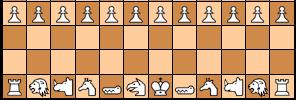
When looking for a suitable board to use for the 39-square chess variant design challenge, it ocurred to me that 13 triangles, each divided into three parts, would work quite nicely. Here is the initial setup:
(Here, White is capital; Black is lower case.)
The Pieces
The moves of the pieces are direct translations, (as nearly as possible on this board) of pieces in standard chess.
The Rook:
The rook moves through paths of cells forming two hexagons. It may not jump over any pieces, but it is often possible for it to reach a square in more than one way. It is not legal to move the rook through a full circle so that it ends in the cell where it began the turn.
The Bishop:
The bishop moves along lines without jumping as below:
The Knight:
The knight can jump to eight positions.
The Pawn:
The pawn is a bit more complicated. The essential rule is: move (without capturing) away from the starting zone as a rook, capture in the same general direction as a bishop. What this means depends on the orientation of the cell the pawn is moving from. The diagram below covers all general cases; the green arrows are captures, and the red arrows are non-capture moves.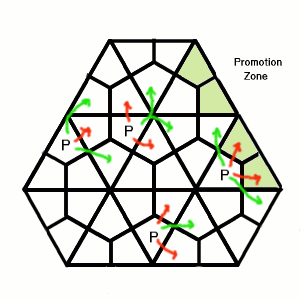
The diagram shows moves for white; the moves for black would be the same reflected across the vertical axis. The four cells farthest from the starting area are the promotion zone. When a player moves a pawn to one of these cells, e must choose to change it into a rook, knight, or bishop. There is no initial double move. One additional rule regarding pawns is that a pawn cannot be captured unless it is under threat, (that is, it could be captured,) by another piece. This prevents the capture that could otherwise occur on the first turn.
The King:
The king moves one square in any direction a bishop or rook can move. All rules regarding check and mate are the same as in standard chess. There is no castling move.
Aside from the unusual board and piece moves, all rules are the same as standard chess. Of course, not content to leave well enough alone, I created a rather different game based on this one that is my real submission to the 39-square contest.
Written by Alexandre Muñiz. Send comments to (email removed contact us for address) t.net.
WWW page created: November 30, 1998.